
Latest
Scams & Fraud

Michigan AG Dana Nessel and Scam Analysts Warn Consumers of Cloned Retail Sites and AI Family Impersonation

Entering the holiday shopping weekend, Michigan Attorney General Dana Nessel and scam analysts urged consumers to inspect lookalike URLs, reject unusual payment demands, and set a family password against AI voice cloning.

Read the story
Scams & Fraud · Read the story
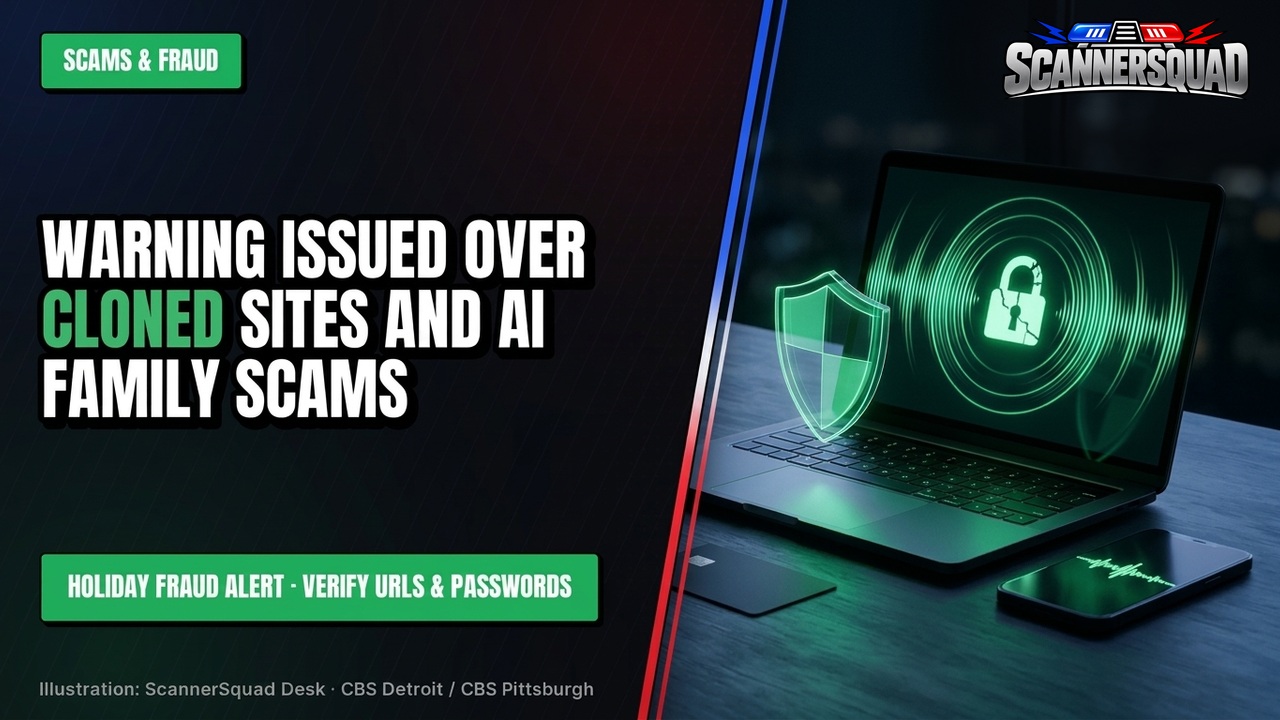
Night-black ScannerSquad Scams & Fraud thumbnail with emerald-green sticker bars reading Warning Issued Over Cloned Sites and AI Family Scams, Holiday Fraud Alert · Verify URLs & Passwords, divided by a 10-degree blue-white-red light-bar slash from a cyber-fraud desk scene with an open laptop showing a cracked emerald padlock, glowing security shield, blank card, and waveform phone screen.
Illustration: ScannerSquad Desk · CBS Detroit / CBS Pittsburgh
Share this story
Cloned URLsLookalike Links via Social Ads
Card CheckRefusing Credit Cards Signals Fraud
Code WordShared Password Stops AI Cloning

Detroit — State law-enforcement officials and scam analysts are urging holiday shoppers and families to guard against cloned retail websites, unusual payment demands, and AI-generated voice and video impersonations heading into the Thanksgiving shopping weekend, CBS News Detroit and CBS News Pittsburgh reported.

Speaking Wednesday, Nov. 25, Michigan Attorney General Dana Nessel cautioned shoppers against clicking promotional links on Instagram, Facebook, or TikTok, warning that malicious ads frequently steer users to counterfeit domains tailored to harvest payment details and personal data.

Spotting Lookalike Storefronts and Payment Traps

Nessel explained that fraudulent sites often imitate major retailers using subtle typos, extra letters, or unexpected punctuation in the web address. “You’ll see it’s not Amazon; it’s Amazon with two N’s at the end or with a slash or a hyphen. It’s a completely different website. That’s not legitimate,” she told CBS News Detroit.

When shoppers spot an appealing deal on social media, Nessel recommended opening a browser separately and navigating directly to the retailer’s known domain rather than following the ad link. She also flagged payment methods as an immediate diagnostic test: “If that retailer is asking for an unusual payment to be made, then you know it’s a scam. If somebody’s not accepting credit cards, then they’re not a legitimate enterprise,” she said, urging victims to file complaints with her office’s Consumer Protection Bureau so investigators can pursue recovery.

Using Family Passwords Against AI Deepfakes and Sextortion

Alongside online storefront fraud, scam-intelligence analysts warned families gathering this week to address artificial-intelligence impersonation schemes directly. Richard Stocks, CEO of scam-intelligence firm FLGGD and creator of the two-page Family Scam Plan guide, told CBS News Pittsburgh that criminals routinely exploit holiday distractions to target both younger and older relatives.

  • Verify Storefronts Directly: Skip clickable social-media shopping ads, inspect URLs for extra characters or hyphens, and pay only with standard credit or debit protections.
  • Set a Family Code Word: Agree in person on a single memorable password that anyone claiming to be a relative in an urgent call or video must provide before money is sent.
  • Protect Youth & Older Adults: Stocks noted that young people — especially boys targeted by sextortion — encounter scams more frequently, while older adults face higher average financial losses per incident.

“It is impossible for that communication to work, however great the video is, however great the audio is, if they don’t know your password,” Stocks said, advising households to designate one trusted relative to double-check any unexpected request for cash or transfers.

Sources & Reporting Credits

Reporting verified via CBS News Detroit and CBS News Pittsburgh.

Thumbnail and hero: Illustration: ScannerSquad Desk · CBS Detroit / CBS Pittsburgh.